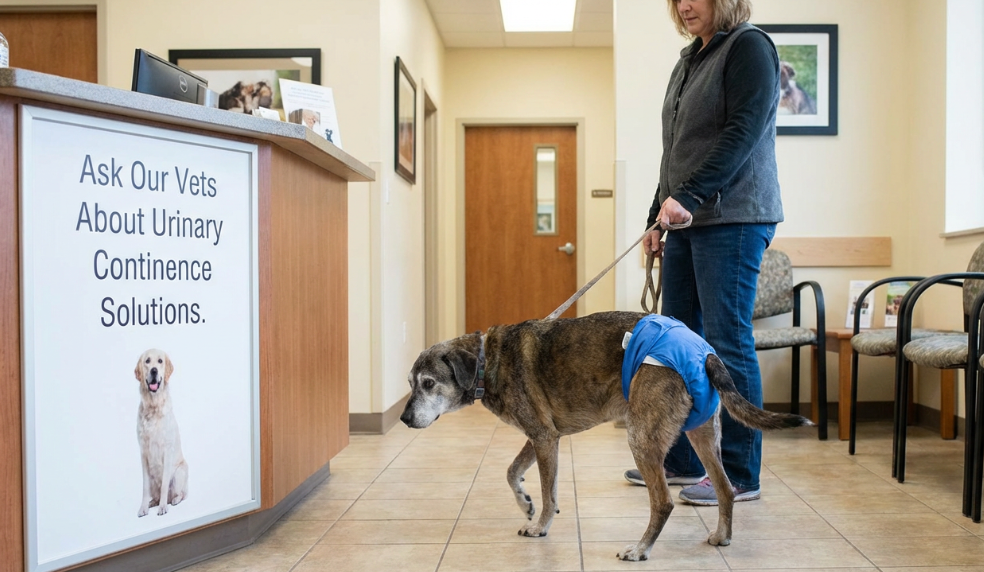
Many pet owners feel confused, worried, or even embarrassed when they discover wet spots where their dog has been lying, or notice urine leaking without their dog’s awareness. Urinary incontinence in dogs is more common than most people realize, affecting approximately 20% of spayed female dogs and a significant percentage of older dogs of both sexes.
The good news is that urinary incontinence in dogs is highly treatable in most cases. Whether your dog dripping urine is due to hormonal changes, age-related weakening, neurological issues, or underlying medical conditions, effective treatments exist. This comprehensive guide will help you understand the causes, recognize the symptoms, explore diagnostic approaches, and discover both medical and natural treatment options available in 2026.
What Is Urinary Incontinence in Dogs?
Urinary incontinence in dogs refers to the involuntary or uncontrolled leakage of urine. Unlike inappropriate urination (which involves conscious voiding in wrong places), true urinary incontinence in dogs happens without the dog’s awareness or control—they literally don’t know they’re leaking.
Key Characteristics:
- Dog dripping urine while resting or sleeping
- Wet spots on bedding or floor where dog was lying
- Damp fur around vulva or prepuce
- No squatting or typical urination posture
- Dog seems unaware of leakage
- Often occurs during relaxation or sleep
It’s crucial to distinguish urinary incontinence in dogs from behavioral issues, urinary tract infections (which cause frequent, urgent urination), or marking behavior.
Common Causes of Urinary Incontinence in Dogs
Understanding why your dog dripping urine helps determine the most effective treatment approach.
1. Hormone-Responsive Incontinence (Most Common in Spayed Females)
What it is: Loss of estrogen after spaying weakens the urethral sphincter—the muscle that controls urine release.
Statistics: Affects 5-20% of spayed female dogs, typically appearing months to years after spaying.
Risk factors:
- Larger breeds (over 50 lbs): German Shepherds, Dobermans, Rottweilers, Old English Sheepdogs, Springer Spaniels
- Early spaying (before first heat)
- Obesity
- Tail docking (controversial association)
Signs: Dog dripping urine primarily when sleeping or resting; normal urination at other times.
2. Age-Related Incontinence (Senior Dogs)
What it is: Natural weakening of bladder sphincter muscles and reduced muscle tone with age.
Typical age: Dogs over 8-10 years old
Contributing factors:
- Cognitive decline (canine cognitive dysfunction)
- Reduced mobility affecting timely bathroom access
- Weakened pelvic floor muscles
- Decreased nerve function
3. Urinary Tract Infections (UTIs)
What it is: Bacterial infection causing bladder inflammation and urgency.
Signs differentiating from true incontinence:
- Frequent attempts to urinate (small amounts)
- Straining or discomfort when urinating
- Blood in urine
- Strong odor
- Conscious urination in inappropriate places (not true incontinence)
Note: UTIs can coexist with urinary incontinence in dogs, complicating diagnosis.
4. Anatomical Abnormalities
Ectopic Ureters
- Congenital condition where ureters (tubes from kidneys) connect abnormally to bladder or urethra
- Causes constant urine dribbling from puppyhood
- More common in females
- Breeds predisposed: Siberian Huskies, Labrador Retrievers, Golden Retrievers, Bulldogs
Urethral Sphincter Mechanism Incompetence (USMI)
- Weakness or malfunction of urethral sphincter
- Most common in middle-aged to senior spayed females
5. Neurological Disorders
Damage or disease affecting nerves controlling bladder function:
- Intervertebral disc disease (IVDD)
- Spinal cord injuries
- Degenerative myelopathy
- Tumors affecting spinal cord or brain
- Cauda equina syndrome
Signs: Often accompanied by weakness, incoordination, or paralysis in hind legs.
6. Bladder Stones or Tumors
- Bladder stones irritate bladder lining, causing overflow incontinence
- Bladder tumors (transitional cell carcinoma) obstruct normal flow
- More common in older dogs
- May see blood in urine, straining, or frequent urination attempts
7. Prostate Disease (Male Dogs)
In intact or neutered males:
- Prostate enlargement (benign prostatic hyperplasia)
- Prostatitis (prostate infection)
- Prostate cancer
Signs: Difficulty urinating, straining, dog dripping urine, blood in urine.
8. Overflow Incontinence
What it is: Bladder becomes overfilled and urine “overflows” when pressure exceeds sphincter strength.
Causes:
- Bladder obstruction (stones, tumors)
- Neurological dysfunction preventing complete emptying
- Medications affecting bladder contraction
9. Medications and Medical Conditions
- Diabetes mellitus (excessive thirst/urination)
- Cushing’s disease (hyperadrenocorticism)
- Kidney disease
- Medications: Steroids (prednisone), certain sedatives
Breeds Predisposed to Urinary Incontinence in Dogs
| Breed | Primary Risk Type | Relative Risk |
|---|---|---|
| Doberman Pinscher | Hormone-responsive | Very High |
| Old English Sheepdog | Hormone-responsive | Very High |
| Rottweiler | Hormone-responsive | High |
| German Shepherd | Hormone-responsive | High |
| Springer Spaniel | Hormone-responsive | High |
| Boxer | Hormone-responsive | Moderate-High |
| Weimaraner | Hormone-responsive | High |
| Irish Setter | Hormone-responsive | Moderate |
| Beagle | Multiple causes | Moderate |
| Cocker Spaniel | Multiple causes | Moderate |
Symptoms: Recognizing Urinary Incontinence in Dogs
Primary Signs:
- Dog dripping urine while sleeping or resting
- Wet bedding or spots where dog lies
- Damp fur around genitals or hind legs
- Urine scald (reddened, irritated skin from constant moisture)
- Strong urine odor on dog or bedding
- No awareness of leakage—dog doesn’t attempt to urinate
Secondary Complications:
- Skin infections (bacterial or yeast) from constant moisture
- Urinary tract infections (stagnant urine in weakened bladder)
- Behavioral changes (anxiety, hiding due to owner reactions)
Signs This Is NOT Simple Incontinence (Requires Immediate Vet Visit):
- Straining to urinate with little/no output (emergency—possible obstruction)
- Blood in urine
- Painful urination (crying, whimpering)
- Hind leg weakness or paralysis
- Excessive thirst and urination (diabetes, kidney disease)
- Vomiting, lethargy, loss of appetite
Diagnosis of Urinary Incontinence in Dogs
Proper diagnosis is essential because treatment varies dramatically based on cause.
Step 1: Complete Medical History
Your veterinarian will ask:
- When did dog dripping urine start?
- Is it constant or intermittent?
- Does it happen during sleep/rest or also when active?
- Is your dog spayed/neutered? When?
- Any recent injuries, surgeries, or illnesses?
- Medications currently taking?
- Changes in thirst or urination frequency?
- Any other symptoms (weakness, behavioral changes)?
Step 2: Physical Examination
What the vet checks:
- Abdominal palpation (bladder size, masses, pain)
- Neurological exam (reflexes, sensation, coordination)
- Rectal exam (males: prostate size; females: pelvic abnormalities)
- Skin condition around genitals (urine scald, infection)
- Body condition score (obesity assessment)
Step 3: Urinalysis and Urine Culture
Essential first test for any dog dripping urine:
- Urinalysis: Checks for infection, crystals, blood, protein, glucose
- Urine culture: Identifies specific bacteria if infection present
- Collection method: Cystocentesis (needle through abdomen into bladder) is gold standard for accurate culture
Step 4: Blood Work
Complete Blood Count (CBC) and Chemistry Panel:
- Rule out kidney disease, diabetes, Cushing’s disease
- Check overall organ function
- Assess for systemic illness
Step 5: Imaging Studies
Radiographs (X-rays)
- Visualize bladder stones
- Assess bladder size and position
- Check for spinal abnormalities
Ultrasound
- Better visualization of bladder wall thickness
- Detect tumors or masses
- Evaluate kidneys, prostate, uterus (if intact)
- Identify ectopic ureters (sometimes)
Advanced Imaging (When Needed)
- Contrast cystography: Dye study to visualize bladder/urethra abnormalities
- CT scan or MRI: For suspected neurological causes or complex anatomical issues
- Cystoscopy: Camera inserted into bladder to directly visualize abnormalities
Step 6: Specialized Tests
- Urethral pressure profile: Measures sphincter strength (specialized referral)
- Neurological evaluation: For suspected spinal/nerve issues
Treatment Options for Urinary Incontinence in Dogs
Treatment for dog dripping urine depends entirely on the underlying cause. Here are evidence-based options available in 2026:
Medical Treatments
1. Phenylpropanolamine (PPA) – First-Line Treatment
Brand names: Proin®, Propalin®
How it works: Increases urethral sphincter tone by stimulating alpha-adrenergic receptors.
Effectiveness: 75-90% success rate for hormone-responsive incontinence
Dosage: Typically 1.5-2 mg/kg every 12 hours (dose varies)
Pros:
- Fast-acting (often works within 3-7 days)
- Well-tolerated by most dogs
- Available in tablet and liquid form
Potential side effects:
- Restlessness, hyperactivity
- Increased heart rate or blood pressure
- Loss of appetite (rare)
Contraindications: Dogs with heart disease, hypertension, glaucoma, kidney disease
Monitoring: Blood pressure checks recommended, especially initially
2. Hormone Replacement Therapy
Estriol (Female Dogs)
Brand names: Incurin® (estriol tablets)
How it works: Replaces estrogen lost after spaying, improving sphincter tone.
Effectiveness: 60-75% success rate
Dosage: Initial loading dose, then maintenance (usually once daily)
Pros:
- Natural approach addressing root cause
- Fewer side effects than older estrogen products
- Can be combined with PPA for refractory cases
Potential side effects:
- Rare: bone marrow suppression (with long-term use at high doses)
- Estrogen toxicity (very rare at proper doses)
Monitoring: Periodic blood counts recommended
Testosterone (Male Dogs)
Used occasionally for intact or neutered males with incontinence
Note: Less commonly needed; PPA usually first choice
3. Combination Therapy
For dogs not fully responding to single medication:
- PPA + Estriol: Synergistic effect, often successful when one alone fails
- Used in approximately 20-30% of cases requiring more aggressive management
4. Antibiotics (If UTI Present)
- Culture-guided selection (based on urine culture results)
- Common choices: Amoxicillin-clavulanate, cephalexin, enrofloxacin
- Duration: 7-14 days for simple UTI; 4-6 weeks for complicated cases
Important: Treating UTI alone won’t cure urinary incontinence in dogs if underlying sphincter weakness exists, but it prevents complications.
Surgical Treatments
Reserved for cases not responding to medication or anatomical abnormalities.
1. Colposuspension
What it is: Surgical procedure repositioning bladder neck to improve sphincter function.
Candidates: Dogs not responding to medical management
Success rate: 50-60%
Considerations: Invasive surgery; requires specialized surgeon
2. Urethral Bulking Agents
What it is: Injectable materials (collagen, synthetic polymers) injected around urethra to improve closure.
Method: Minimally invasive; done via cystoscopy
Success rate: 50-70% initially; may require repeat treatments
Advantages: Less invasive than traditional surgery
2026 Update: Newer synthetic agents show improved longevity
3. Artificial Urethral Sphincter
What it is: Hydraulic device implanted around urethra to control urine flow.
Availability: Limited to specialized veterinary teaching hospitals
Success rate: High, but requires significant commitment and monitoring
4. Ectopic Ureter Correction
For congenital cases: Surgical repositioning of abnormally placed ureters
Success rate: 50-60% (some dogs still need medical management post-surgery)
Best outcomes: When diagnosed and treated young
Natural and Supportive Treatments
While not replacements for medical therapy in most cases, these can support overall urinary health:
1. Weight Management
Critical for overweight dogs: Obesity worsens urinary incontinence in dogs by increasing abdominal pressure on bladder.
Goal: Achieve ideal body condition score (4-5 out of 9)
Benefits: Can reduce incontinence severity by 20-30% in overweight dogs
2. Herbal Supplements
Corn Silk Extract:
- Traditional remedy for urinary support
- May strengthen bladder tissue
- No strong veterinary studies confirming efficacy for dog dripping urine
Saw Palmetto (Male Dogs):
- Supports prostate health
- May help with prostate-related incontinence
Cranberry Extract:
- Prevents UTIs (does NOT treat active infection)
- Helps maintain urinary tract health
Caution: Always consult veterinarian before adding supplements; some interact with medications.
3. Acupuncture
Evidence: Growing veterinary literature supports acupuncture for neurological-related urinary incontinence in dogs.
How it helps: Stimulates nerves controlling bladder function
Best for: Spinal injury or degenerative conditions
Frequency: Weekly sessions initially, then maintenance
4. Physical Therapy and Core Strengthening
For neurological cases: Targeted exercises strengthen pelvic floor muscles.
Techniques:
- Underwater treadmill therapy
- Specific muscle-strengthening exercises
- Proprioceptive training
Requires: Certified veterinary rehabilitation therapist
Management and Lifestyle Adjustments
Even with treatment, some management strategies improve quality of life:
1. Protective Bedding
- Waterproof mattress covers or washable pee pads
- Elevated orthopedic beds with removable, washable covers
- Disposable underpads for temporary situations
2. Doggy Diapers
Types:
- Disposable diapers (convenient but costly long-term)
- Washable cloth diapers (economical, eco-friendly)
- Belly bands (for male dogs with minor leaking)
Tips:
- Change frequently to prevent urine scald
- Apply barrier cream (petroleum jelly, zinc oxide) to protect skin
- Ensure proper fit to prevent chafing
3. Hygiene Routine
- Daily cleaning of genital area with pet-safe wipes
- Regular bathing (weekly or as needed)
- Trim fur around genitals for cleanliness
- Monitor for skin infections (redness, odor, discharge)
4. Scheduled Bathroom Breaks
- Frequent outdoor access (every 3-4 hours minimum)
- Last bathroom break right before bedtime
- First thing in morning immediately upon waking
- After meals and water consumption
5. Monitoring Fluid Intake
- Don’t restrict water unless veterinarian specifically advises
- Monitor for excessive drinking (could indicate diabetes, kidney disease)
- Evening water management: Some vets recommend limiting water 2-3 hours before bedtime (discuss with your vet first)
Home Care Tips for Dog Dripping Urine
Preventing Urine Scald and Skin Infections:
| Strategy | How To | Frequency |
|---|---|---|
| Gentle cleansing | Use unscented baby wipes or pet wipes | After each incident |
| Barrier cream | Apply petroleum jelly or zinc oxide to skin | Twice daily |
| Thorough drying | Pat completely dry after cleaning | Every cleaning |
| Fur trimming | Keep genital area fur short | Monthly or as needed |
| Inspection | Check for redness, odor, sores | Daily |
Odor Control:
- Enzymatic cleaners for bedding and floors (Nature’s Miracle, Rocco & Roxie)
- Baking soda added to wash cycle for bedding
- Air purifiers with activated charcoal filters
- Regular laundering of dog bedding (hot water, pet-safe detergent)
Emotional Support:
Important: Never punish a dog for urinary incontinence—they have no control over it.
Instead:
- Remain calm and matter-of-fact during cleanup
- Maintain normal routines and affection
- Use positive reinforcement for successful outdoor urination
- Consider anxiety supplements if stress develops (consult vet)
Prognosis: What to Expect
Hormone-Responsive Incontinence:
- Excellent prognosis with medication
- 75-90% of dogs respond well to PPA or hormone therapy
- Lifelong medication usually required
- Most dogs live normal, comfortable lives
Age-Related Incontinence:
- Good to fair prognosis
- Often manageable with medication
- May worsen with advancing age
- Quality of life maintained with proper management
Neurological Causes:
- Variable prognosis depending on underlying condition
- Some cases improve with treatment; others progressive
- Rehabilitation therapy can help
Anatomical Abnormalities:
- Good prognosis if surgically correctable
- Ectopic ureters: 50-60% cure rate with surgery; others need medication
UTI or Bladder Stones:
- Excellent prognosis once treated
- Incontinence typically resolves with infection/stone treatment
When to Contact Your Veterinarian Immediately
Seek emergency veterinary care if your dog dripping urine also shows:
- Complete inability to urinate (straining with no output)
- Bloody urine
- Severe abdominal pain (crying, hunched posture, rigid abdomen)
- Hind leg paralysis or sudden weakness
- Collapse or extreme lethargy
- Vomiting combined with urinary changes
- Excessive thirst and urination (drinking entire water bowl multiple times daily)
Prevention Strategies
While you cannot entirely prevent urinary incontinence in dogs, certain strategies may reduce risk:
1. Maintain Healthy Weight
Obesity significantly increases incontinence risk in predisposed breeds.
2. Consider Spay Timing
Emerging research (2026): Delaying spay until after first heat cycle in large-breed females may reduce hormone-responsive incontinence risk. Discuss with your veterinarian—this decision involves balancing multiple health factors.
3. Regular Veterinary Checkups
Annual exams (semi-annual for seniors) catch early signs of conditions causing secondary incontinence.
4. Prompt UTI Treatment
Untreated chronic UTIs can contribute to bladder dysfunction.
5. Maintain Bladder Health
- Provide frequent bathroom opportunities
- Fresh water always available
- Cranberry supplements for dogs prone to UTIs (consult vet)
Cost Considerations (2026 Estimates)
| Treatment | Approximate Monthly Cost | Notes |
|---|---|---|
| Phenylpropanolamine (PPA) | $30-$60 | Generic available |
| Incurin (Estriol) | $40-$80 | Brand name |
| Diagnostic workup (initial) | $300-$800 | Varies by tests needed |
| Washable diapers | $20-$50 (one-time) | Plus laundry costs |
| Disposable diapers | $40-$100 | Ongoing expense |
| Surgical options | $1,500-$5,000+ | Depends on procedure |
Pet insurance: Many policies cover urinary incontinence in dogs treatment if diagnosed after policy start.
Living with a Dog with Urinary Incontinence
Thousands of dogs with urinary incontinence live happy, full lives. With proper treatment and management:
What most owners report:
- Medication controls symptoms in majority of cases
- Routine becomes manageable with practice
- Strong bond maintained through compassionate care
- Quality of life remains excellent
Keys to success:
- Patience and consistency with treatment
- Regular veterinary follow-ups for medication adjustments
- Good hygiene practices to prevent complications
- Positive attitude—your dog isn’t misbehaving; they need medical help

Why is my dog having a diarrhea?